
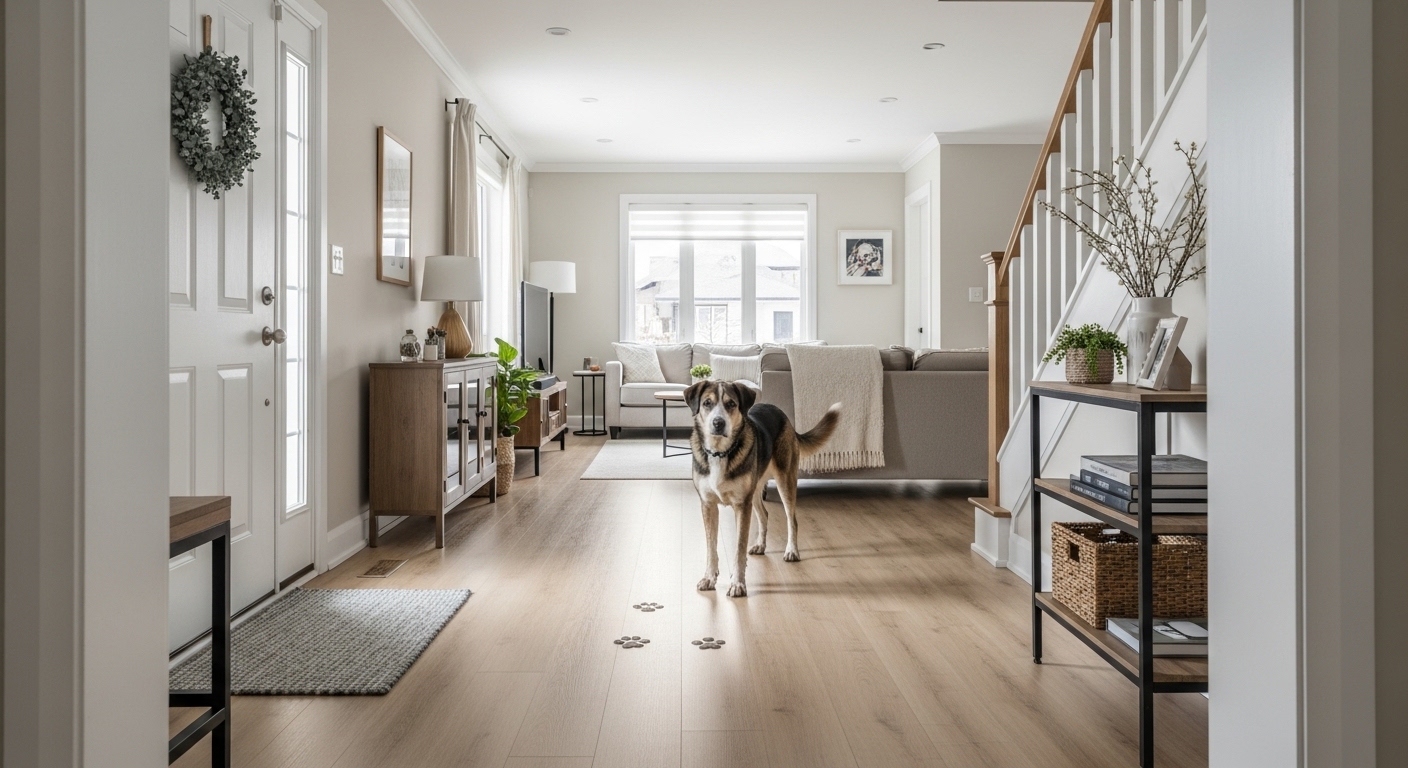
Pet-Friendly Flooring in London, Ontario: Style That Survives the Muddy Paws (2026 Guide)
Life with pets in London, Ontario is the dream—until you look down at your floors. We live in the Forest City for a reason. Between the off-leash areas at Pottersburg-FNP and the endless trails of the TVP (Thames Valley Parkway), London is a paradise for dog owners and outdoor people. But when your dog comes home with clay mud on their paws, or your cat treats the hallway like a racetrack, your flooring becomes the frontline.
For years, pet owners searching for flooring in London were told to pick one: either “durable but ugly” or “beautiful but doomed.” In 2026, that compromise is outdated. Modern flooring technology has advanced fast—now we can get floors that look like premium European Oak, warm reclaimed wood, or clean modern stone, while still surviving the daily chaos of a pet-friendly home.
This guide breaks down what actually damages floors in a pet household, which materials win in London’s real conditions (mud, winter salt, shedding, claws, and moisture), and how to choose a floor that stays stylish for the long run.
Part 1: The Three Enemies of Pet-Friendly Floors
Before we talk about materials, let’s name the problems. Pet-friendly flooring isn’t only about scratches. In London, it’s about a combination of movement, moisture, and mess—often happening in the same week.
1) The “Zoomie” Scratch
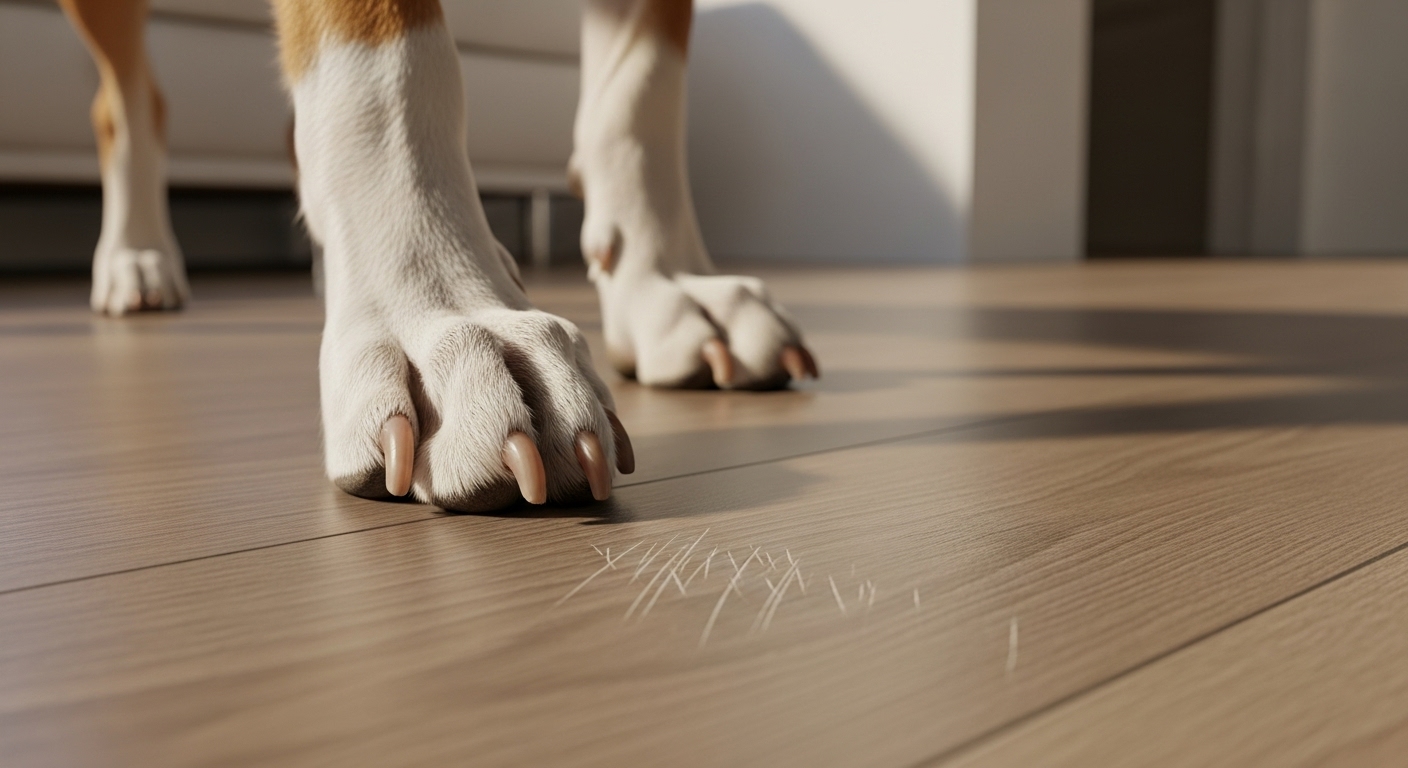
The number-one complaint we hear from pet owners looking for flooring London Ontario options is claw marks. Even when nails are trimmed, pets create concentrated pressure points—especially when they accelerate, corner, or stop suddenly. Over time, this can create micro-scratches, dull traffic lanes, and visible wear around furniture legs and high-turn areas.
The solution: Hardness and wear ratings. Depending on the material, you’ll want to pay attention to two indicators:
- AC Rating (AC4 or AC5) for laminate/hybrid products. These ratings indicate stronger wear layers built for higher traffic.
- Hardwood species hardness (Janka scale) if choosing real wood—Hickory and Maple tend to perform better than softer species.
Real talk: even hard hardwood can still scratch in a busy pet home. That’s why many homeowners choose surfaces with tough wear layers rather than relying only on wood hardness.
2) The “Muddy Trail”
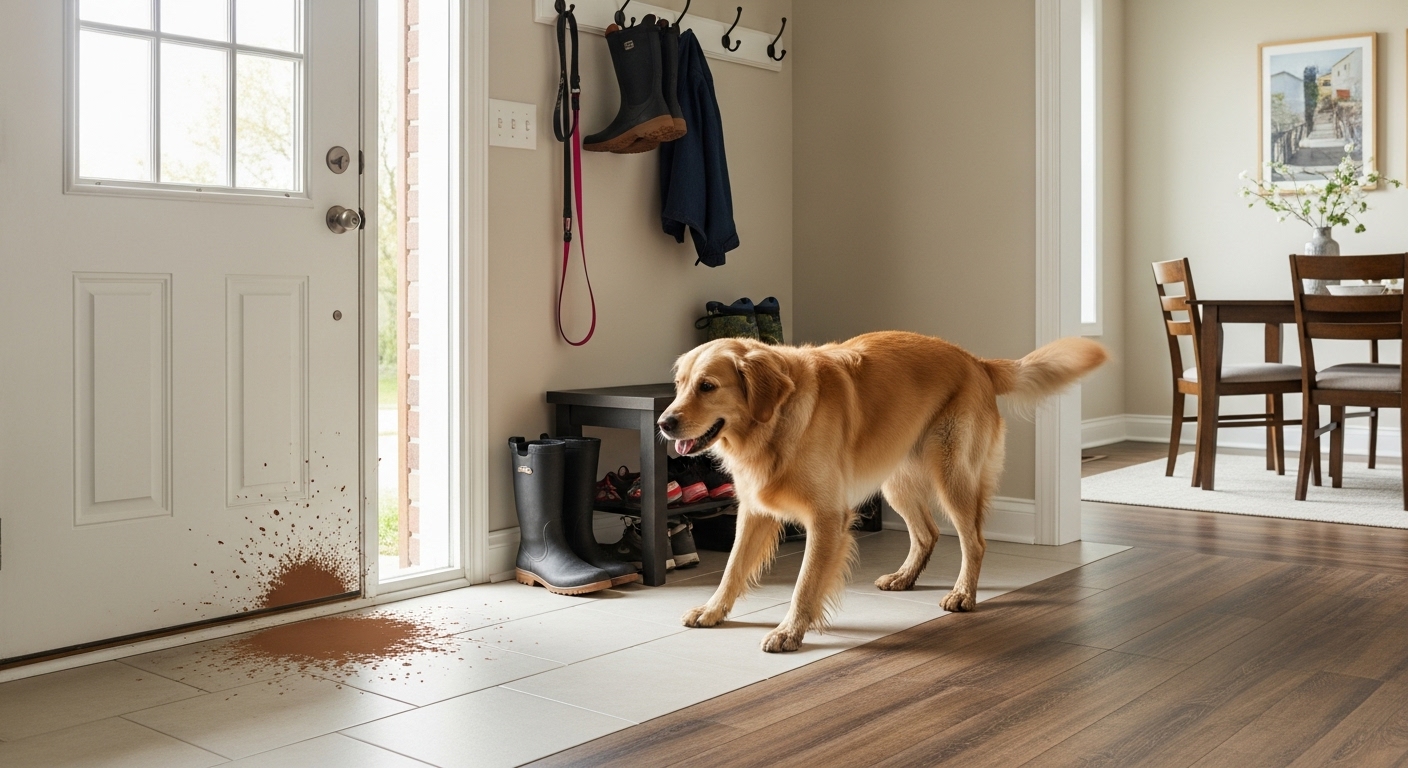
London’s clay-heavy soil is uniquely annoying. When it’s wet, it sticks. When it dries, it turns into fine grit that can grind into finishes. If your floor has deep faux grooves or heavy hand-scraped textures, mud and hair can settle into the low points. That makes daily cleaning harder, and it can slowly sand down the surface over time.
The solution: Choose the right finish. In a pet home, finish matters almost as much as material:
- Matte or satin finishes hide paw prints, smudges, and dust far better than glossy surfaces.
- Light texture is fine, but avoid extremely deep grooves in high-mud areas like entrances and hallways.
High-gloss floors can look amazing in photos, but in real pet life they behave like mirrors—every paw print becomes a spotlight moment. Matte is the sanity-saving choice.
3) The “Accident”
Accidents happen. Puppies, senior pets, rescued animals adjusting to a new routine—sometimes it’s just part of the deal. Historically, this is where hardwood suffered the most: liquid would seep into seams, swell the wood, stain the surface, and leave odor behind.
The 2026 solution: truly waterproof cores. The biggest shift in pet-friendly flooring is the rise of modern waterproof systems—especially 100% waterproof SPC vinyl. These floors are non-porous. Liquid stays on the surface instead of soaking into the core. That means:
- No warping from brief spills or accidents
- Less risk of lingering odor trapped inside the floor
- Faster cleanup with less stress
Part 2: Top Pet-Friendly Flooring Materials for 2026
Pet-friendly doesn’t mean “one-size-fits-all.” The best choice depends on where in the house the floor will go (mudroom vs. bedroom), how many pets you have, whether you deal with frequent wet paws, and what style you want long-term. Here are the three top categories that consistently perform well in London homes.
1) Stone Plastic Composite (SPC) Vinyl
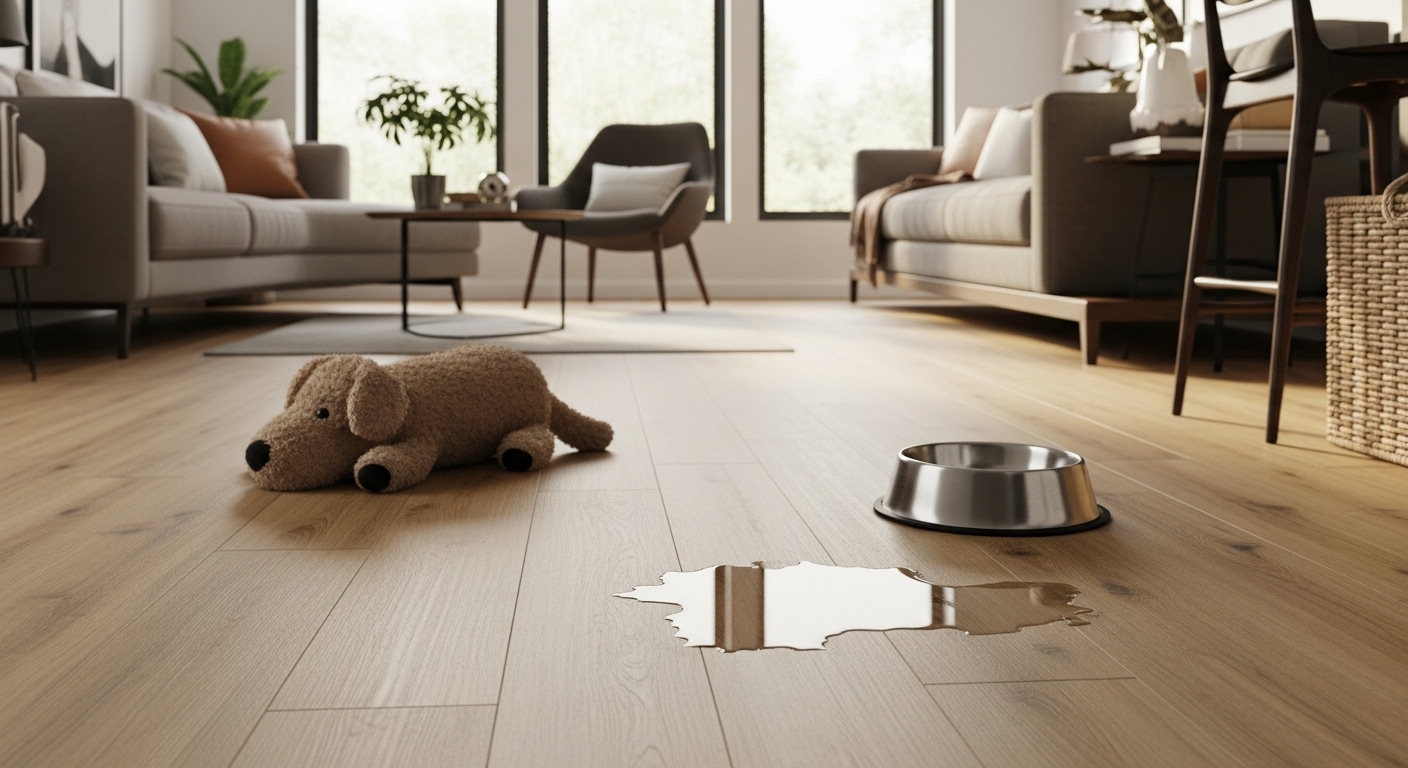
SPC is the undisputed heavyweight champion of pet-friendly flooring in London. It’s designed for real-life abuse: wet boots, dropped dishes, heavy furniture, and yes—muddy paws.
Why it works: The “Stone” in the name refers to a limestone-based core. That dense core makes planks incredibly stable and highly resistant to denting. It also improves locking strength, which helps seams stay tight even in busy households.
Why pet owners love it:
- Waterproof: accidents and spills stay on top
- Scratch resistant: strong wear layers reduce claw marks
- Easy cleanup: quick sweep + damp mop is usually enough
Pet comfort bonus: Many 2026 SPC products come with a pre-attached cork or acoustic underlay. That helps reduce the “click-clack” sound of nails and makes the surface warmer and softer for pets who nap on the floor.
2) Hybrid Laminate (Modern Water-Resistant Laminate)
Forget the cheap laminate of the 90s. Today’s hybrid laminate products have improved cores, stronger locking systems, and better water resistance than most homeowners expect. In 2026, many are built with resin-infused or treated cores that resist swelling and can handle moisture exposure for extended periods (often up to 72 hours, depending on product and installation).
The big advantage: Laminate is often harder than many real hardwoods. If you have multiple large dogs—or one dog who behaves like multiple dogs—hybrid laminate can be an excellent choice for scratch resistance.
Best places to use it:
- Living rooms and hallways with high foot + paw traffic
- Open-concept main floors where you want a “wood” look
- Homes where scratch resistance is the #1 priority
Pro tip: If pet accidents are frequent (puppy stage, seniors), SPC vinyl is still the safest bet. Hybrid laminate is fantastic for scratch resistance, but waterproof vinyl wins for moisture peace of mind.
3) Textured Porcelain Tile (Especially for Entryways + Mudrooms)
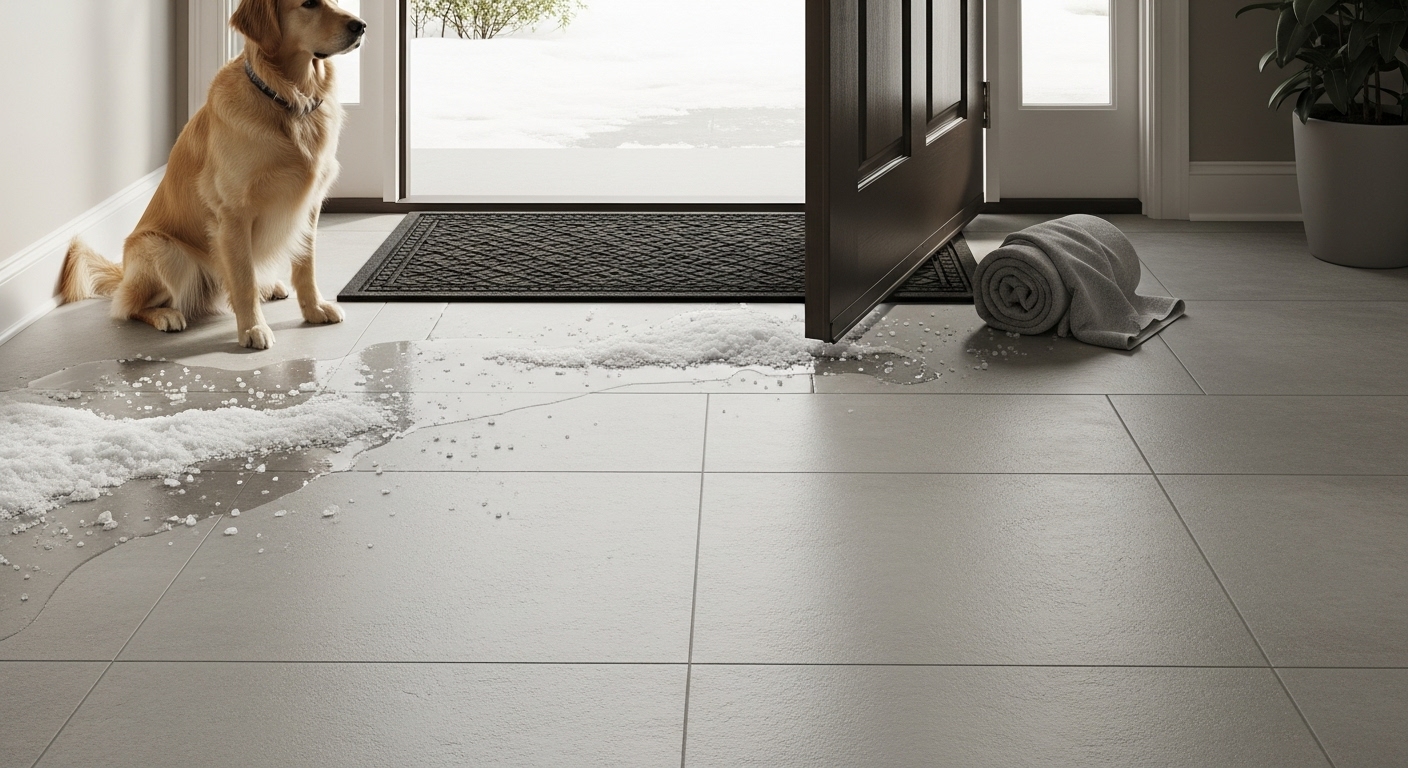
In entryways and mudrooms, nothing beats tile. Porcelain is dense, durable, and non-porous. It’s ideal for London winters when road salt and slush try to destroy everything near the door.
Design tip: Use a wood-look porcelain tile. You get the cozy visual of a cottage or modern farmhouse while enjoying the durability of a commercial-grade surface. It’s especially effective in mudrooms, laundry areas, and pet-wash zones.
Safety note: Choose a lightly textured tile (or a finish rated for slip resistance). That helps older dogs maintain traction—especially near entrances where paws may be wet.
Part 3: The Mudroom Strategy — London’s First Line of Defense
For many Londoners, the mudroom is the most important room in the house—especially if you have pets. It’s the transition zone between the Forest City outdoors and your clean interior. A smart mudroom setup can dramatically reduce wear on your main floors.
The Dual-Floor Setup: Wet Zone + Main Zone
One of the most effective layouts is a two-surface strategy:
- Wet Zone: Porcelain tile right at the door for salt, slush, muddy paws, and dripping coats.
- Main Zone: Waterproof LVP/SPC for the rest of the entry/mudroom flow so the whole space stays cohesive.
This setup is practical because it keeps the mess contained where it happens—without forcing your entire home to be tile. It’s also visually clean when you use coordinating tones (for example, warm “oak-look” vinyl paired with a neutral stone-look tile).
Radiant Floor Heating (A Pet-Luxury That’s Also Practical)
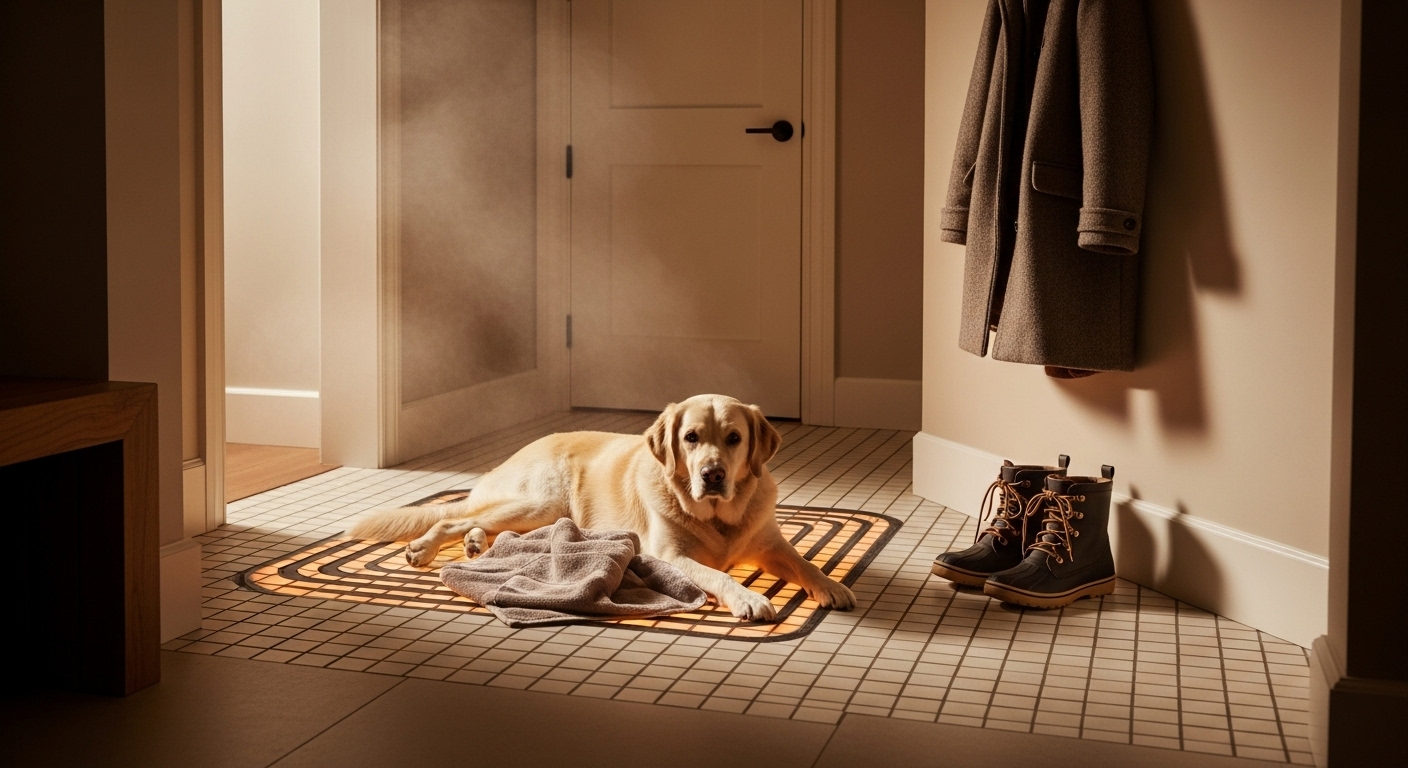
In 2026, radiant floor heating is increasingly treated as a standard upgrade—especially in tile-heavy spaces like mudrooms and bathrooms. It’s not only about comfort for humans. Pets love it too.
Why it helps pet homes:
- Warm tile becomes a favorite nap spot in winter
- It helps dry wet paw prints and slush faster
- Less lingering dampness near entrances
Part 4: Maintenance Tips for London Pet Owners
Choosing the right flooring matters, but small daily habits make the difference between “still looks new” and “why does it look tired already?” Here’s a maintenance routine designed for London’s weather and pet reality.
1) The “Salt Sweep” (Winter Routine)
London uses plenty of road salt and grit in winter. That grit is abrasive—and once it’s inside, it can grind against your floor’s surface under every step and paw.
Do this: sweep or vacuum daily in winter, especially near:
- front doors and garage entries
- mudrooms and hallways
- the “favorite path” your dog takes to the water bowl
2) Trim Those Nails
It sounds obvious, but it’s the #1 way to extend the life of any floor. Blunt nails reduce scratch pressure dramatically. If your pet hates nail trims, even regular walks on rougher sidewalk surfaces can help keep nails naturally duller between grooming sessions.
3) Rugs as “Pit Stops”
Area rugs are not just décor in a pet home—they’re protection zones. Place high-quality, washable rugs:
- at every entrance
- at the bottom of stairs (where dogs love to launch)
- in front of the couch (the classic zoomie runway)
The goal isn’t to cover your whole floor—it’s to create strategic “landing zones” where mess and momentum happen most.
Conclusion: Don’t Choose Between Your Pet and Your Style
Living with pets in London is a lifestyle—and your floors should be designed for it. In 2026, you don’t have to accept scratched hardwood, stained planks, or constant stress every time it rains. With modern materials like SPC vinyl, advanced hybrid laminates, and durable porcelain tile, you can build a home that looks high-end and still survives muddy paws, shedding, and the occasional accident.
The winning approach is simple: choose a surface that matches your pet’s reality, pick finishes that hide everyday mess, and design your layout with a “first line of defense” at the entry. Do that, and your floors stop being fragile décor—and start being a foundation you can actually live on.